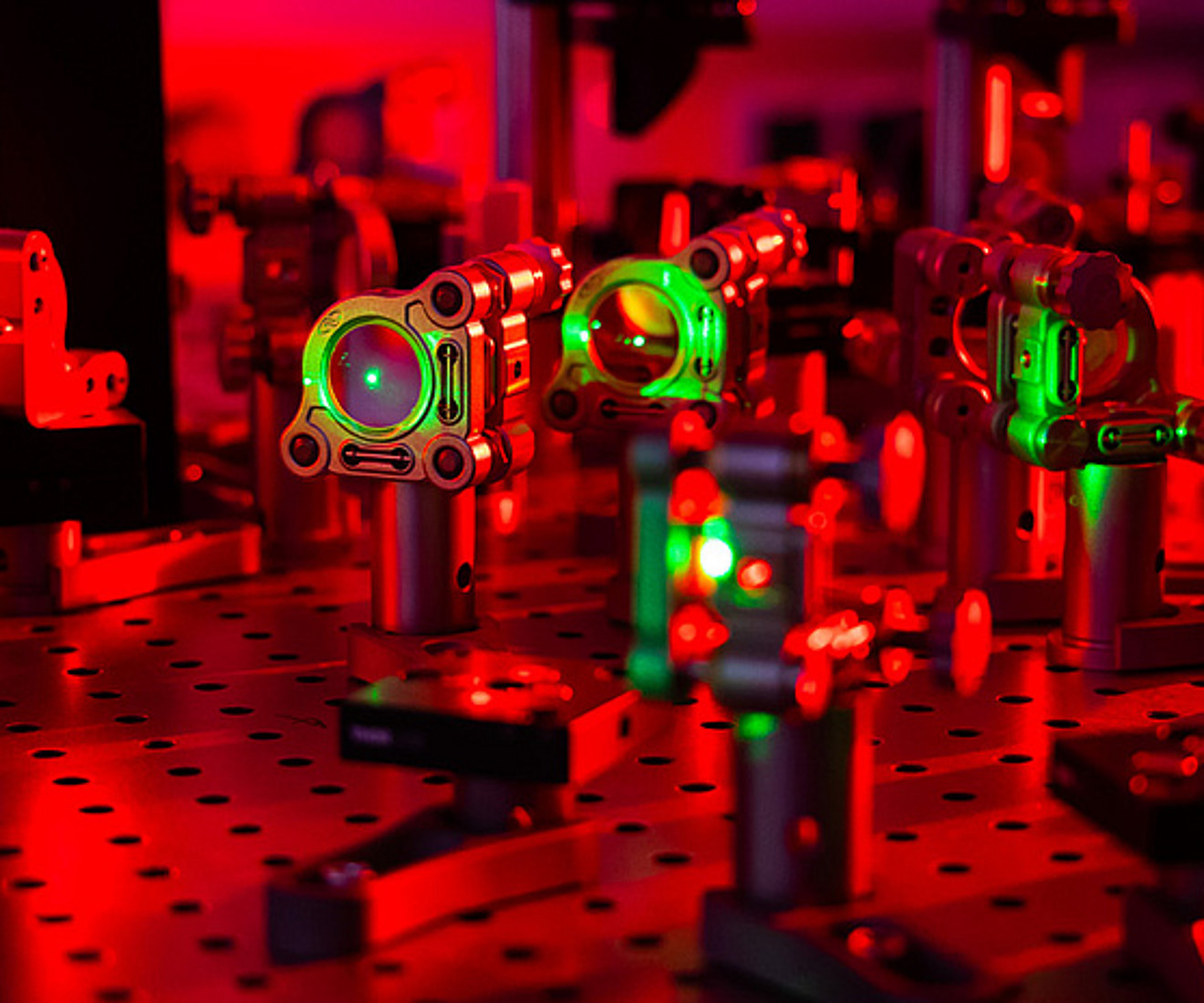
This expertise is now being applied in a new FFG Spin-off Fellowship project. Led by Jan Enenkel, the project is developing an optical measurement platform designed to analyze individual circulating tumor cells. The approach combines custom-tailored light fields, field-enhancing nanostructures, and Raman spectroscopy. The aim is not only to detect ‘biomarkers’ on tumor cells, but also to visualize their functional organization on the cell surface, a potential key to more precise, personalized cancer therapies.
The research impressively demonstrates how nanostructured light can become a versatile tool, opening up new avenues from fundamental physics to medical studies. Read Jan’s and Peter’s guest contribution to the APA Science series “Changing the world on a small scale—research projects show how micro and nano innovations can lead to major breakthroughs.”
Contact: peter.banzer(at)uni-graz.at
Link to the project: https://projekte.ffg.at/projekt/5150091
APA Science article: https://science.apa.at/power-search/10041568197504050347
OpNaQ group: https://opnaq.uni-graz.at/en/